First: A Permission Slip
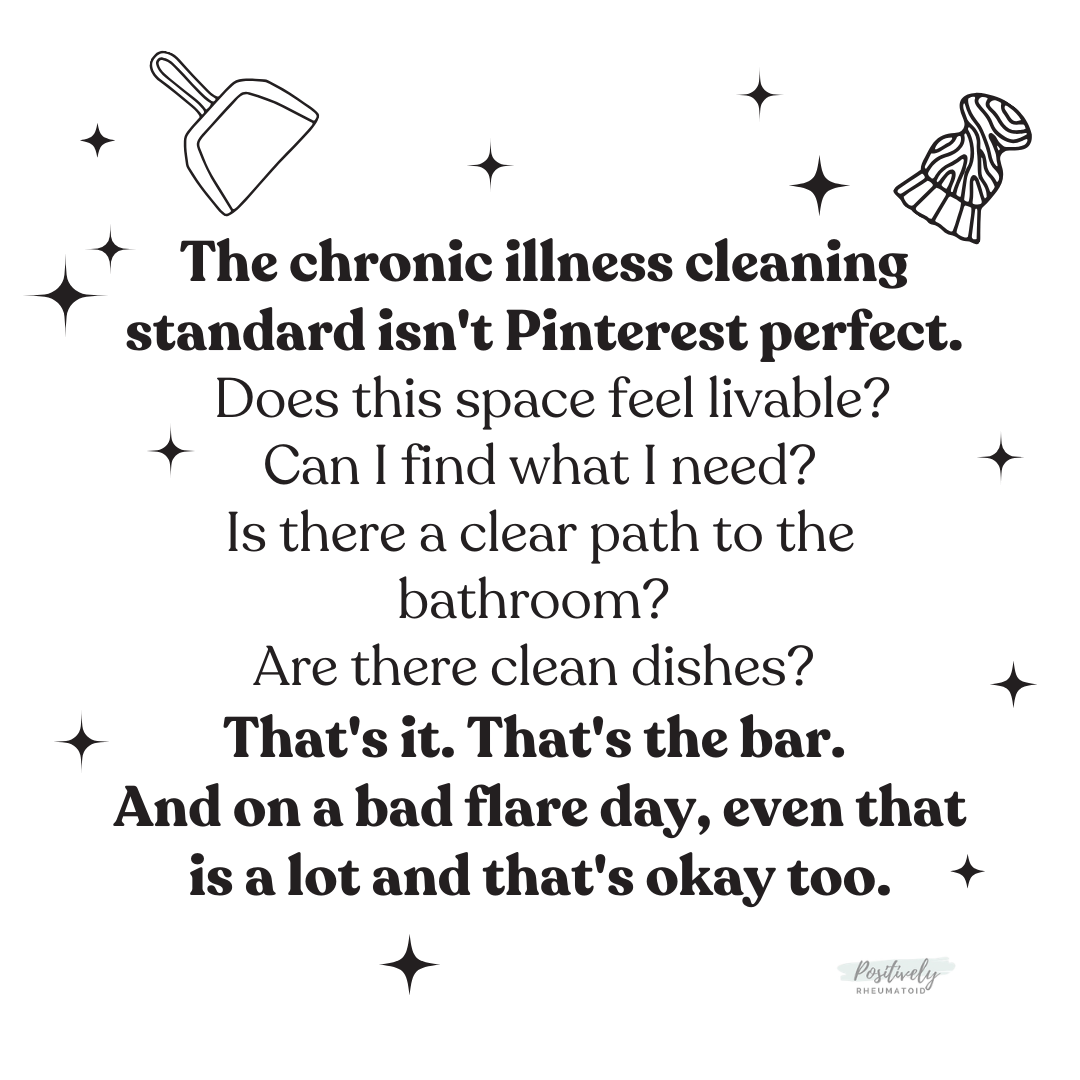
Before we get into tips and tools, we need to talk about the standard you’re holding yourself to because I’d bet it’s way too high. Most of us were raised with the idea that a clean house equals a good person. That if visitors could eat off your floors, you had your life together. That is absolutely not what we are doing here. The chronic illness cleaning standard is: Does this space feel livable? Can I find what I need? Is there a clear path to the bathroom? Are there dishes available to eat from?
That’s it. That’s the bar. And on a bad flare day, even that is a lot and that’s okay too.
You are not failing. Your body is doing something incredibly hard, every single day. Keeping a house is a bonus, not a baseline.
Let’s Be Honest About the Bathroom
You looked at it. You thought about cleaning it. You went and lay down instead.
If your immune system has ever decided to declare war on your own joints, tissues, or basic bodily functions, you already know that cleaning a house feels less like a chore and more like a personal attack. The advice out there is not helpful. “Just do a little each day!” Cool. My hands don’t work in the morning. “Make it fun with music!” Sure, I’ll absolutely dance with a mop while my hips are in a flare.
This post is not that. This is a real, practical, zero judgment guide to keeping your space livable (not Pinterest perfect) when you’re tired, in pain, or running on your last two spoons. We’re going to talk about tools, strategies, product recommendations, and grace. Lots of grace.
Cleaning on a Spoon Budget: The Zone Method
If you’re familiar with Spoon Theory, you already know the deal: we start each day with a limited number of “spoons” (units of energy), and every task costs one. Chronic illness means you start with fewer spoons and spend them faster than healthy people.
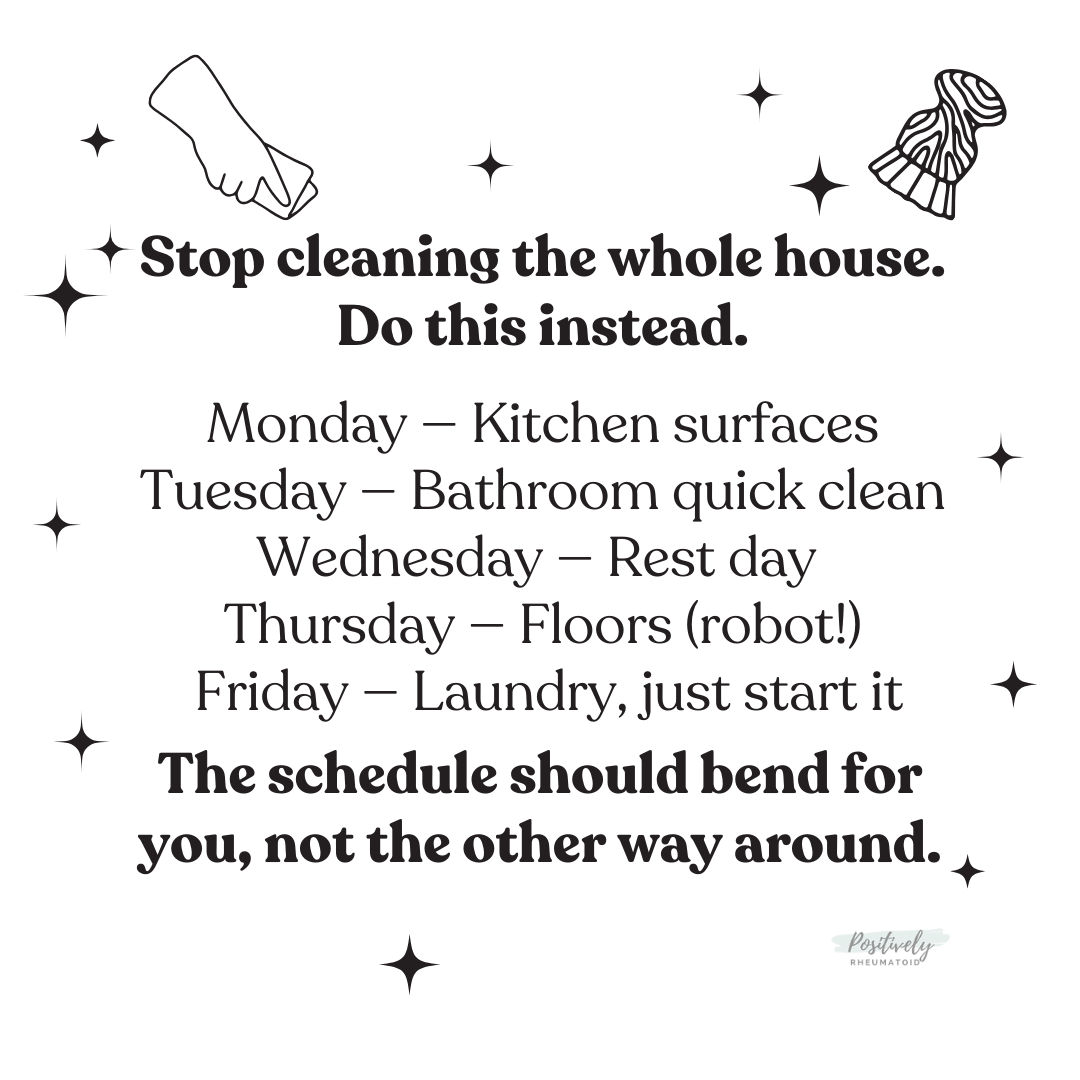
So trying to clean your entire house in one session? That’s not a cleaning strategy, that’s a flare trigger. Instead, try Zone Cleaning spread across the week:
| Day | Zone / Task | Spoon Cost |
|---|---|---|
| Monday | Kitchen surfaces + load dishwasher | Low, sit while you wipe |
| Tuesday | Bathroom quick-clean (toilet + sink) | Low-Medium |
| Wednesday | Rest or catch-up day | Zero |
| Thursday | Floors (robot does this for you!) | Almost none |
| Friday | Laundry — start it, don’t fold it | Low |
| Saturday / Sunday | One bigger task OR total rest | Your call |
The key is: one zone, one day, one task. Not the whole house. Not even the whole room. One thing.
And if Wednesday becomes a rest day, Thursday can absorb what didn’t happen. The schedule bends for you not the other way around.
The Chronic Illness Cleaning Arsenal: Products Worth Every Penny
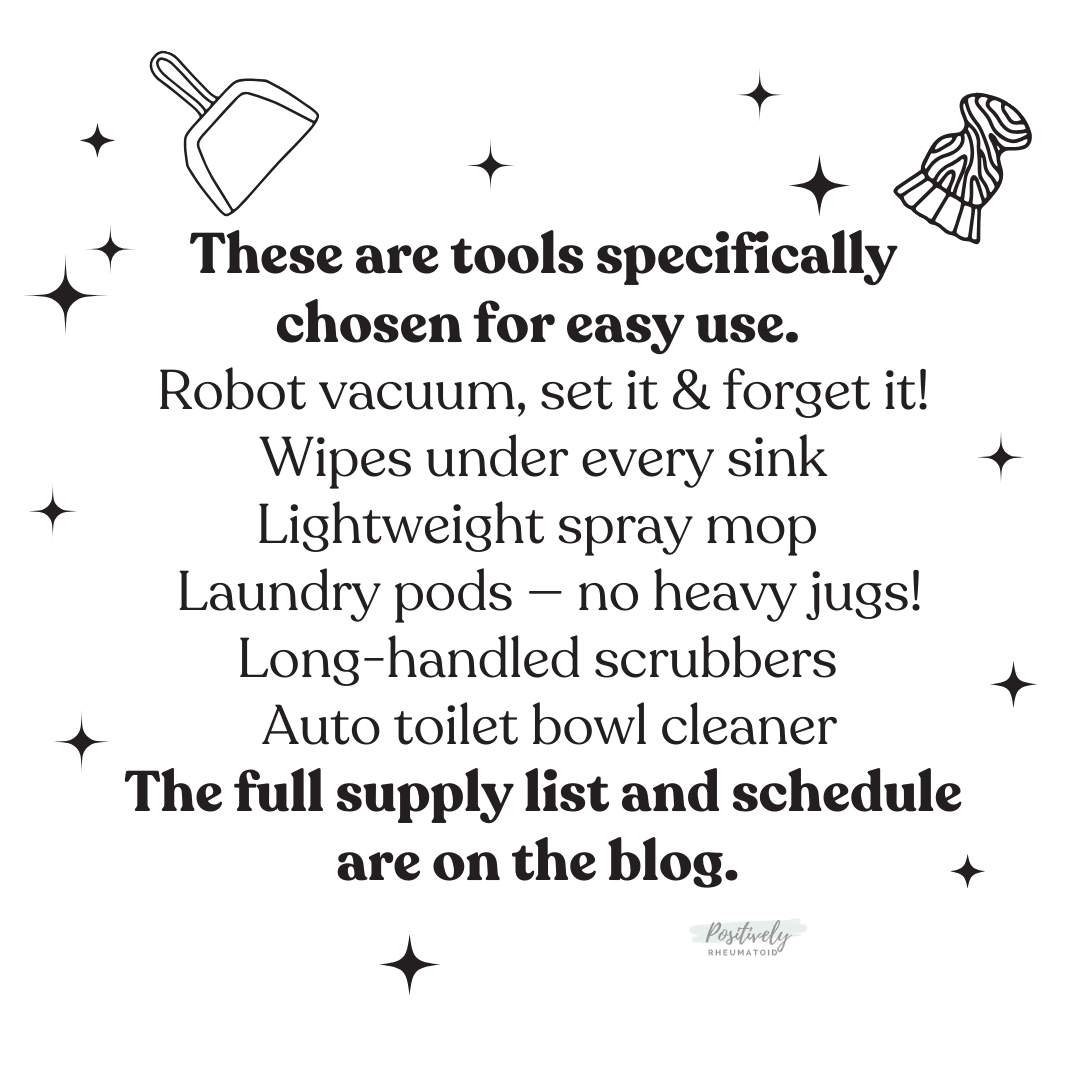
These aren’t just “easy” products. These are tools specifically chosen because they reduce grip strain, eliminate bending, cut scrubbing time, or let you clean sitting down. That’s the standard we’re using.
Robot Vacuum, The Absolute MVP
If you invest in one thing, make it this. A robot vacuum runs on a schedule, requires zero physical effort from you, and handles daily floor maintenance so you never have to sweep again.
- Why it helps: Zero bending, zero standing, zero grip required. Set it and forget it.
- Look for: iRobot Roomba (mid-range), Eufy RoboVac (budget-friendly), or Roborock if you want mopping too.
- Bonus: Get one with auto-empty so you don’t even have to deal with the dustbin daily.
Spray Mop with Washable Pad
Traditional mops are a wrist and shoulder nightmare. A lightweight spray mop means no bucket, no wringing, no heavy lifting. You just push, spray, and go.
- Why it helps: Much lighter than traditional mops, triggers spray with one finger, and the pad is machine washable.
- Look for: O-Cedar EasyWring Microfiber Spray Mop or the Bona Hardwood Floor Spray Mop.
Disposable Cleaning Wipes
Clorox wipes, Lysol wipes, Method wipes, whatever your preference. Grab a wipe, clean a surface, throw it away. No spray bottle, no rag, no rinsing.
- Why it helps: One-handed, low-grip, works sitting down on toilet or counter edges. Bathroom clean in 3 minutes flat.
- Pro tip: Keep a canister under every sink so there’s zero effort to get started.
Automatic Toilet Bowl Cleaner
Drop a tablet in the tank or clip a gel cleaner to the bowl, and your toilet is basically self-cleaning between scrub sessions. That’s one less thing to physically do.
- Look for: Scrubbing Bubbles Continuous Clean tablets or the Clorox ToiletWand disposable system for when you do need to scrub.
Laundry Pods + Dryer Sheets
Pre-measured detergent pods mean no heavy jugs to lift, no measuring, no pouring. Toss one in, press start. The same goes for dryer sheets over liquid softener.
- Why it helps: Eliminates lifting, measuring, and gripping heavy bottles with inflamed hands.
- Look for: Tide PODS, Gain Flings, or if you’re sensitive to fragrance (important for many autoimmune folks!), Seventh Generation Free & Clear pods.
Long Handled Scrubbers & Extendable Tools
A long-handled scrubber for the tub or shower means no bending, no kneeling, no contorting. You can clean the shower floor while standing upright.
- Why it helps: Protects hips, knees, and back from the floor-level positions that wreck you for the rest of the day.
- Look for: OXO Good Grips long-handled brushes, or the Turbo Scrub electric scrubber (it does the work so your hands don’t have to).
Caddy or Rolling Cart
Stop carrying supplies from room to room. A small caddy that holds your wipes, cleaner, and gloves means you’re not making extra trips or dropping things because your grip gave out.
- Look for: A lightweight plastic caddy with a handle, or a small rolling cart you can push room to room without lifting.
Protecting Your Hands, Wrists & Joints While Cleaning
This is the section I wish existed when I was first diagnosed. So much of cleaning involves grip, twist, and bend, the exact movements that cost us the most.
Wear Gloves, But the Right Kind
Rubber gloves protect your skin from harsh chemicals (important if you’re immunocompromised or on biologics), but they also give you better grip so you’re not squeezing as hard. Look for gloves with textured palms and a non-tight wrist band so you’re not straining to pull them off.
Use Your Forearm, Not Your Hand
When wiping counters or surfaces, use a flat palm or the inside of your forearm to apply pressure instead of gripping a cloth. It distributes the force across a larger area and takes pressure off inflamed joints.
Spray, Wait, Then Wipe
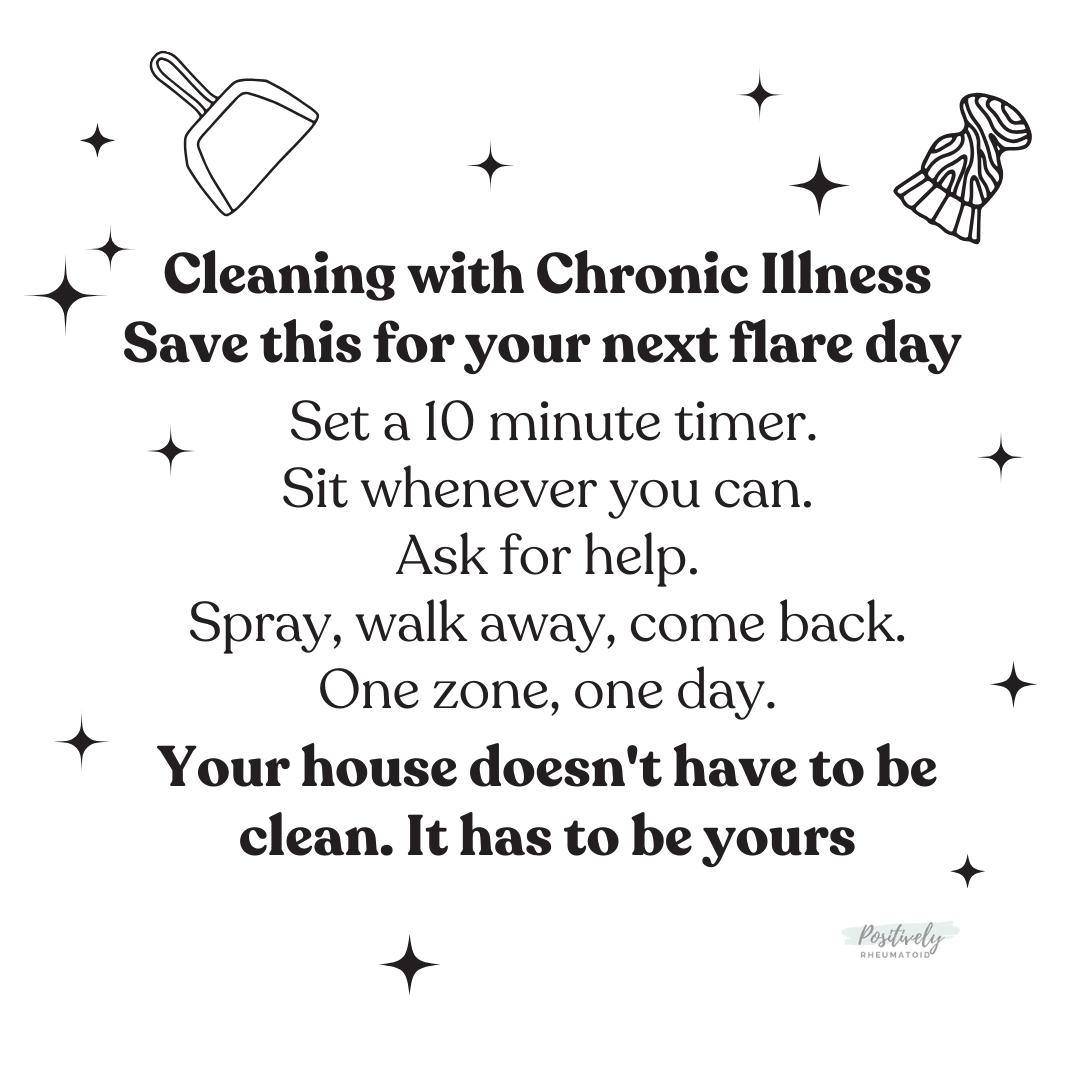
Spray cleaner on a surface, walk away, do something else for 2–3 minutes, then come back. The cleaner does the work and you barely have to scrub. This alone will cut your physical effort in half.
Sit When You Can
Use a low stool at the bathroom vanity, a chair at the kitchen counter, or a shower seat to do tasks at waist height while seated. This is not laziness, this is joint preservation. Sitting down while cleaning also reduces fatigue significantly.
Choose Trigger Sprays Over Pump Bottles
Trigger sprays take one finger. Pump bottles take a full wrist motion, repeatedly. That difference is huge on a bad hand day. Refill trigger bottles from larger containers so you’re not constantly buying new ones.
Energy Saving Strategies That Actually Work
The 10-Minute Rule
Set a timer for 10 minutes. Clean. When it goes off, stop, whether you’re done or not. This removes the psychological dread of “I have to clean the whole kitchen” and replaces it with “I only have to do 10 minutes.” Often you’ll find 10 minutes was enough anyway.
“Good Enough” Standards by Room
Dishes in the dishwasher, counters wiped, trash not overflowing
Toilet clean, sink wiped, towels hung
Couch cleared, floor passable
Bed made (or not, no rules), clothes off the floor
That’s it. If all four of those things are true, your house is clean enough. Done.
Batch Your Tasks with Your Energy
If you’re having a better day, batch two light tasks back-to-back instead of saving them for later. If you’re flaring, drop everything down one level, surfaces only, no floors. No scrubbing, just maintenance wipes.
The Passive Clean
Some cleaning happens without effort when you set the right systems up: daily dishwasher cycle on a timer, robot vacuum on a schedule, toilet tabs working around the clock, laundry started while you rest. This is your passive clean layer, it runs even on days you can’t.
Ask for Help and Get Specific About It
This is the one most of us resist. We don’t want to seem like we can’t manage. We don’t want to explain why it’s hard. We don’t want to deal with “but you look fine.”
But here’s the thing: asking for help with cleaning is not admitting defeat. It’s resource management. You have a limited number of spoons. Using them to scrub a bathtub instead of being present for your kids, your relationships, or your own rest is a choice, and it’s okay to make a different one.
When asking family or partners for help, be specific:
- “Can you run the robot vacuum tonight?”
- “Can you start a load of laundry on Saturday morning?”
- “Can you wipe down the bathroom sink after you use it?”
Specific asks get done. “Can you help more around the house” goes nowhere. Give people a task with a clear action, and most people genuinely want to help. And if hiring a cleaning service? Do it without guilt. Once a month or once a quarter for the big stuff is a legitimate accommodation for a chronic medical condition.
Quick Reference: The Chronic Illness Cleaning Kit
Here’s everything in one place:
You’re Doing Better Than You Think
If you made it to the end of this post I want you to know something: Managing a household with a chronic illness is genuinely hard. It takes creativity, planning, and a lot of adjusting expectations. The fact that you’re looking for solutions instead of giving up says everything about who you are.
Your house doesn’t have to be clean. It has to be yours, a place where you can rest, recover, and live. Everything else is optional. Be kind to yourself today. Your body is already working overtime. And if all else fails, forget the cleaning and take a nap.