Let’s Be Honest About Last Night
You were exhausted at 9pm. You went to bed at 10. You stared at the ceiling until 1am, then finally drifted off. Until you woke up at 3 because your hip had other plans. You shifted. You fluffed the pillow. You tried the other side. You googled “why does my body hurt more at night” for the fourteenth time.
Then your alarm went off and you felt like you hadn’t slept at all.
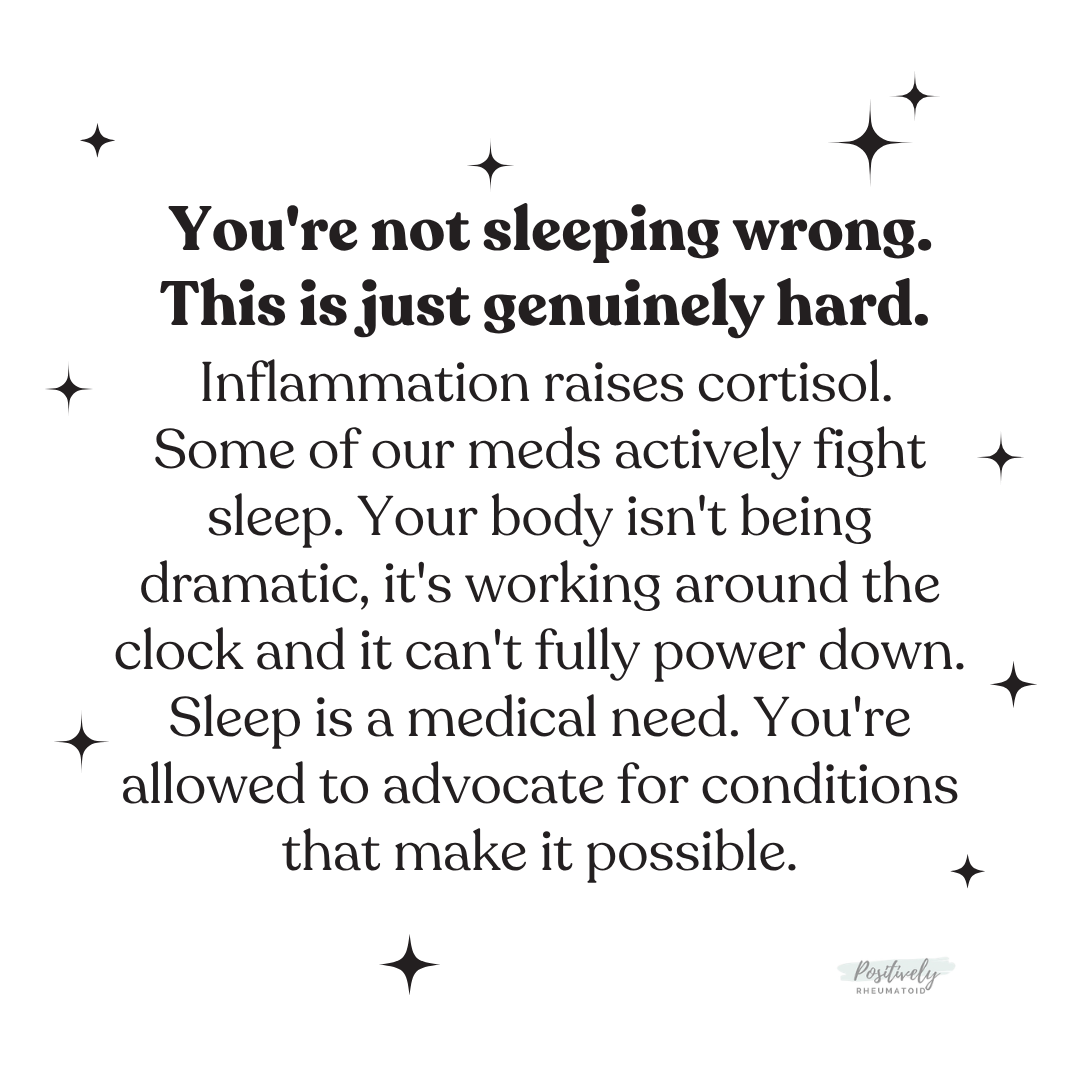
Sleep and chronic illness have a really ugly relationship. Pain signals interrupt your sleep cycle. Inflammation keeps cortisol elevated. And if you’re on steroids, good luck, truly. Your body can’t just power down. It’s in the middle of something.
And the advice out there is not helpful. “Just do a relaxing bedtime routine!” Cool, I’ll just do some light yoga on my inflamed joints. “Try limiting screen time!” My phone is literally the only thing I can do comfortably at 3am. “Have you tried melatonin?” I’ve tried everything, Sharon.
This post is not that. This is an honest, practical guide to getting more and better sleep. Not perfect sleep, not healthy-person sleep. Sleep when your body is in a constant argument with itself.
📌 Reminder: Getting some sleep is a win. Getting good sleep is a bonus. You’re not failing at sleep. Your body is making it genuinely hard. That’s a different thing.
First: Let’s Address the Guilt
A lot of us lie awake feeling bad about lying awake. Like the inability to fall asleep is a personal failure on top of everything else. Like we should be able to just relax. Power down. Do the thing humans have done since the beginning of time.
But here’s what’s actually happening: pain signals interrupt the sleep cycle. Inflammation keeps cortisol elevated. Certain medications, steroids especially, mess with how you sleep on a chemical level. Morning stiffness pulls you out of deep sleep early. Your body isn’t being dramatic. It’s dealing with a lot.
The chronic illness sleep standard is: Did I rest? Did my body get some recovery time? Did I make it to morning?
That’s the bar. Everything else is extra credit.
You are not lazy. You are not broken. You are a person with a real medical condition trying to do one of the hardest things for people with real medical conditions. Give yourself that.
Where It Hurts and What to Put Under It
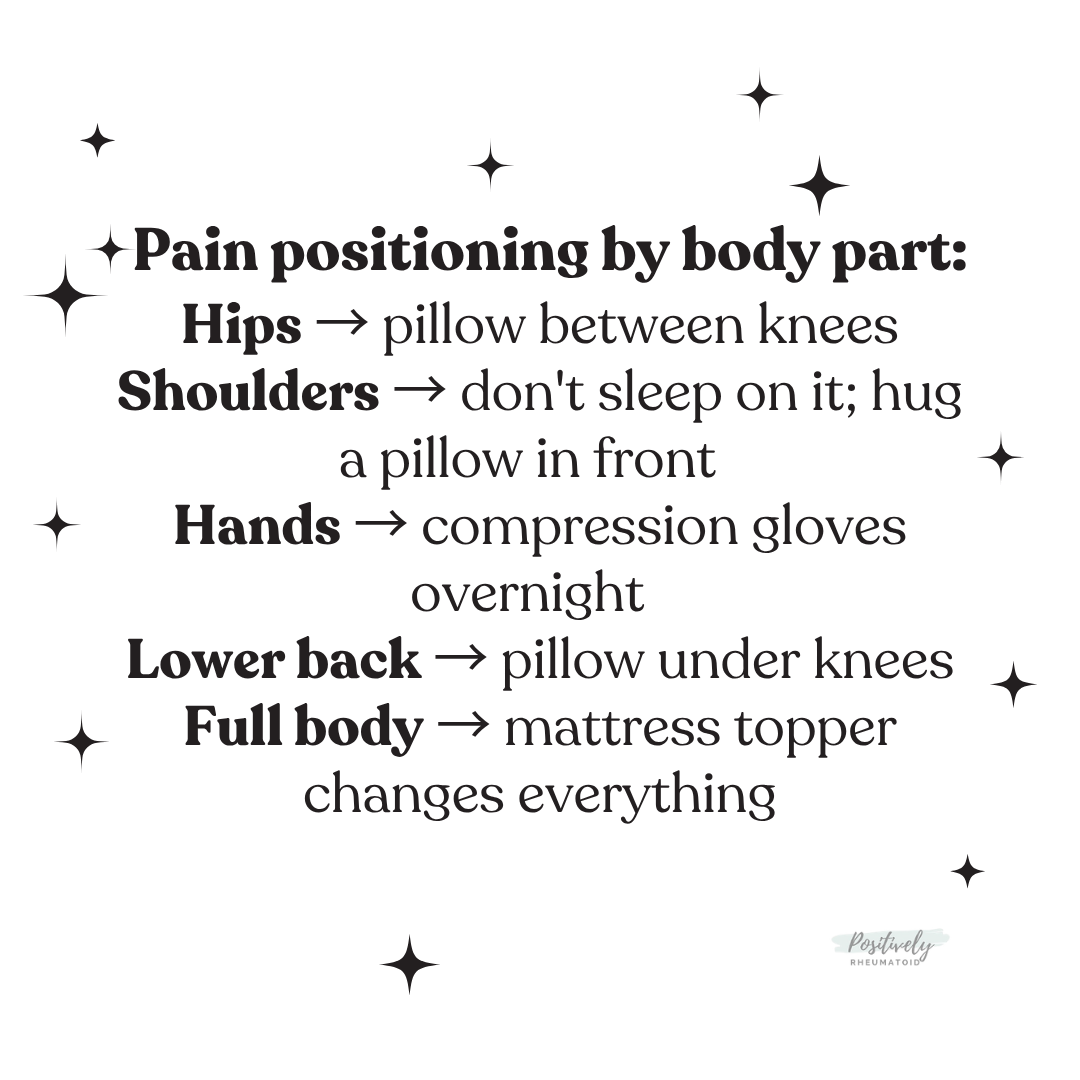
One of the least-talked-about parts of chronic illness sleep is positioning. Healthy people move around in their sleep without waking up. A lot of us can’t. Or every time we do, we’re up. Here’s what actually helps, by body part.
Hips and SI joints
Pillow between your knees when you’re on your side. It sounds too simple to work and it absolutely works. A body pillow is even better because it supports your whole leg and keeps you from rolling.
Shoulders
Don’t sleep on the bad one. Hug a pillow in front of you instead. It keeps the arm forward and takes the pressure off. This also helps if you’re a roller who keeps ending up in the wrong position.
Hands and wrists
Compression gloves overnight. They feel weird for about two nights and then you can’t sleep without them. They reduce the aching that wakes you up at 2am and the stiffness that makes your hands useless until noon.
Lower back
Pillow under your knees on your back, or between your knees on your side. Either one keeps your lumbar curve from collapsing all night. Small adjustment, big difference by morning.
Full body pain
A mattress topper. Not a whole new mattress. A 2 to 3 inch memory foam or latex topper on what you already have. It changes the pressure situation more than almost anything else on this list.
💡 Pro Tip: A body pillow is one of the cheapest, most effective tools for chronic illness sleep. It’s not just for pregnancy. It supports multiple joints at once, keeps you in position, and reduces how much your body fights to stay comfortable all night.
The 3am Problem: What to Do When You’re Awake and Hurting
Waking up in the middle of the night is different from having trouble falling asleep. Once you’re awake and in pain, your brain goes into overdrive. Cataloging everything that hurts. Calculating how many hours until your alarm. Spiraling on the fact that you’re spiraling. It’s a lot.
A few things that actually help:
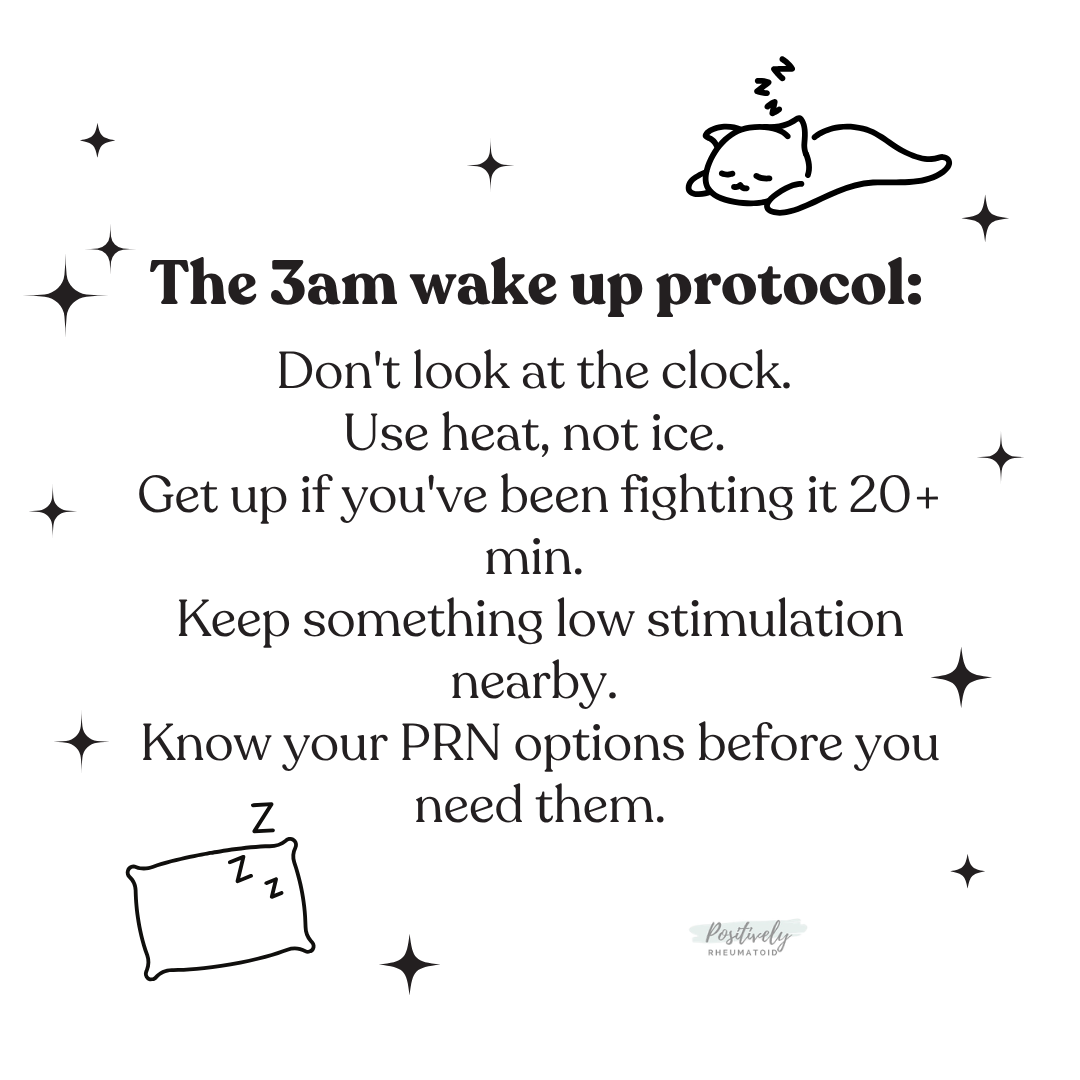
- Don’t look at the clock. Knowing it’s 3:17am tells your brain exactly how much sleep you’re losing. That information does not help you. Turn it away or cover it.
- Heat, not ice. For most joint and muscle pain, heat works better in the middle of the night. A heating pad on low, a microwavable wrap, a hot water bottle on the bad spot. Enough relief to get back under.
- Get up if you need to. Lying there fighting it for an hour is worse than getting up for 15 minutes. Make tea. Sit somewhere else. Go back to bed when you’re drowsy instead of when you’re frustrated.
- Keep something boring nearby. An audiobook you’ve already heard. A podcast that’s basically just talking. Something to give your brain a small task so it stops doing the thing it’s doing.
- Know your options before you need them. Talk to your doctor about what’s available for breakthrough pain at night. Having a plan and something within reach means you’re not just white-knuckling it until morning.
The Chronic Illness Sleep Arsenal: What’s Actually Worth It
These aren’t just “sleep hygiene” products. These are tools chosen because they address pain, positioning, temperature, and the specific misery of being exhausted and unable to sleep. That’s the standard we’re using.
Adjustable Base or Wedge Pillow
If you can get an adjustable bed base, it’s genuinely life-changing. Being able to raise your legs or your head slightly changes how pressure is distributed and can reduce enough pain to actually sleep. The less-expensive version is a wedge pillow. Same basic idea, fraction of the cost.
- Why it helps: Elevating your legs reduces swelling and inflammation. Elevating your head helps with GERD, which is a fun bonus problem that comes with a lot of our medications. And you can adjust without physically moving.
- Look for: IKEA PEKARE wedge pillow (budget), Avana Kind Bed Orthopedic Wedge (mid-range), or a Leggett & Platt adjustable base if you’re ready to invest.
Cooling or Heating Mattress Topper
Temperature is a real problem when you’re on certain medications or dealing with a condition that messes with how your body runs hot or cold. Being the wrong temperature wakes you up even when pain isn’t the main issue.
- Why it helps: Staying at a consistent temperature through the night means fewer wake-ups. Set it up once and it just runs.
- Look for: A gel-infused memory foam topper for cooling, a heated mattress pad for warmth, or the ChiliSleep system if temperature swings are a serious problem.
Body Pillow
Already mentioned above and worth its own spot: a body pillow is probably the single best purchase you can make for joint pain at night. It supports multiple points at once, reduces rolling, and can be hugged, wedged, or draped depending on where you hurt. It is not just for pregnant people. Stop gatekeeping the body pillow.
- Look for: Snuggle-Pedic shredded foam body pillow, PharMeDoc full body pillow, or any C-shaped or U-shaped pillow if you need full surround support.
Compression Gloves
For hand, finger, and wrist pain that wakes you up at night. They feel strange for the first few days. After that they’re non-negotiable. They knock out the 2am ache and reduce the morning stiffness that makes you feel like your hands belong to someone else.
- Look for: Thermoskin Arthritic Gloves, IMAK Compression Arthritis Gloves, or any open-finger compression gloves rated for overnight wear.
White Noise Machine
Years of waking up in pain makes you a light sleeper. Every sound feels louder than it should. A white noise machine creates a consistent background that keeps random noises from pulling you out of sleep over and over.
- Look for: LectroFan (compact, lots of sound options), Marpac Dohm (the classic), or the Sleep With Me podcast if you want a voice instead. It’s specifically designed to be boring enough to fall asleep to.
💜 A Note on Sleep Medications: There are real prescription options for chronic illness sleep. Low-dose amitriptyline, trazodone, gabapentin at bedtime, and others that address both sleep and pain at the same time. If over-the-counter options aren’t cutting it, that’s a conversation worth having with your rheumatologist or primary care doctor. You don’t have to just live with this.
The Thing Nobody Tells You: Fatigue vs. Sleep Deprivation
Here’s something that takes most people years to figure out: chronic illness fatigue and sleep deprivation fatigue feel almost identical. You can sleep ten hours and still feel like you got none, because the fatigue that comes from inflammation and disease activity doesn’t go away with rest. It’s not a sleep problem. It’s a disease problem.
This matters because they don’t have the same fix. If you’ve been doing everything right at bedtime and still waking up wrecked, it might not be your sleep that’s broken. Knowing which problem you’re actually dealing with matters a lot.
A basic sleep tracker, even just from a fitness watch, can show you what your sleep actually looks like. A lot of people find out they’re sleeping better than they thought. And then the conversation becomes about managing disease activity, not fixing bedtime.
The Nap Question
Everyone will tell you not to nap because it disrupts nighttime sleep. Everyone who says that has probably never had a flare wipe them out by noon.
Here’s a more honest version:
- Short naps (20 to 30 minutes) before 2pm are generally fine and don’t significantly affect nighttime sleep for most people.
- Long naps on bad flare days are sometimes necessary. Not a failure. Your body needed it.
- Late afternoon naps (after 3pm) are the ones most likely to mess with falling asleep at night. If that’s a problem for you, this is the one to watch.
The rule isn’t “no naps.” The rule is know your body and make the call that gets you through the day.
👀 Real Talk: Some days the nap IS the plan. You’re managing a disease that is actively consuming your energy. Rest isn’t laziness. It’s medicine. Treat it like that.
Protecting Your Sleep: Asking for What You Need
If you share a bed or a home with someone, your sleep needs might create friction. You need a different pillow setup. You need the temperature a certain way. You might need to sleep somewhere else on bad nights without it meaning something is wrong.
This is worth a direct conversation, not a hint. When you ask, be specific:
“My sleep is directly connected to my pain levels the next day. Can we figure out a setup that works for both of us?”
“On bad nights I might need to move to the other room. It’s not about us. It’s about getting enough rest to function the next day.”
“Can we try [specific thing] for two weeks and see if it helps?”
Sleep is not a luxury. For people with chronic illness it’s a medical need. You’re allowed to ask for what makes it possible.
Quick Reference: The Chronic Illness Sleep Kit
Everything in one place:
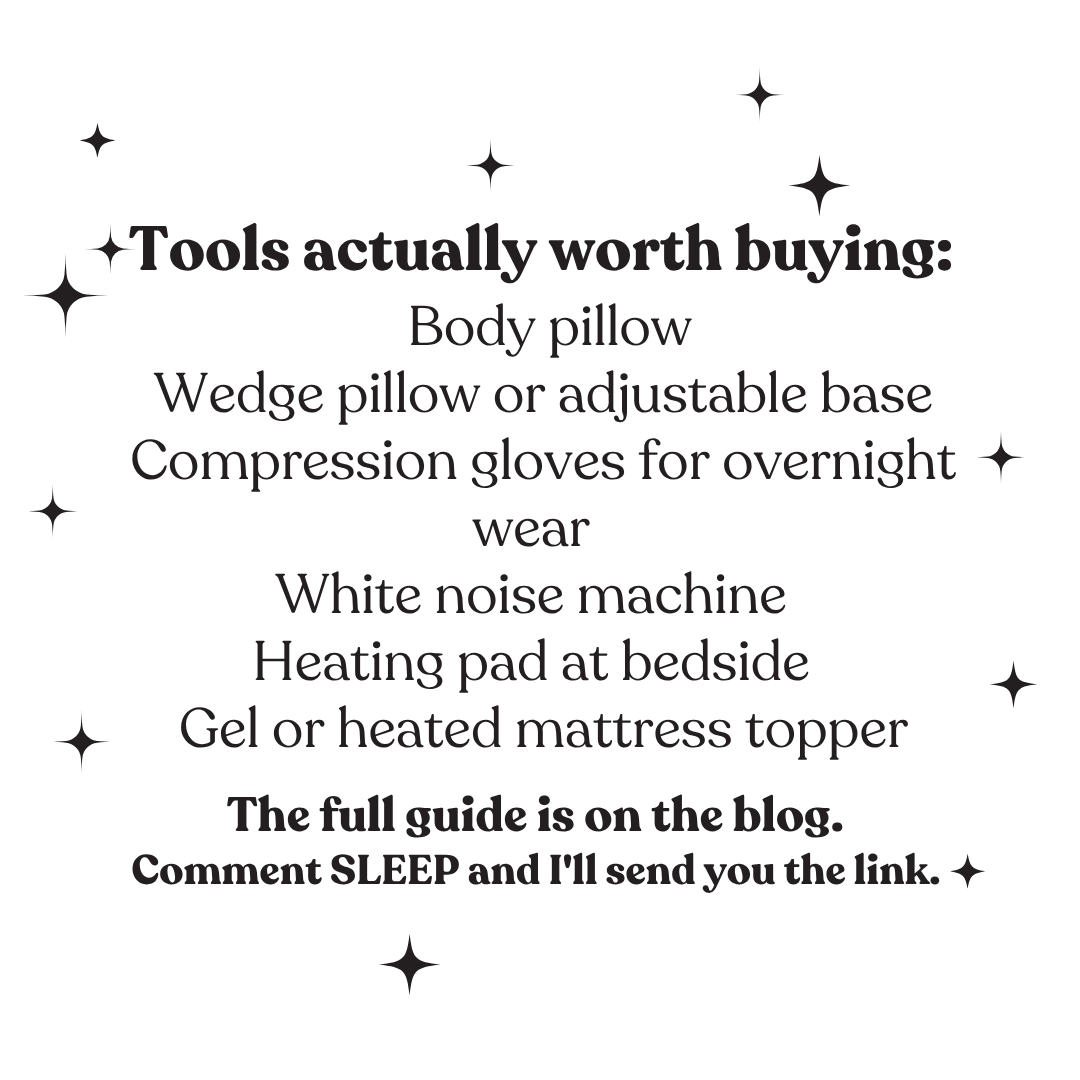
- Body pillow
- Wedge pillow or adjustable base
- Gel or heated mattress topper
- Compression gloves for overnight wear
- White noise machine or app
- Heating pad at the bedside
- Knee pillow for hip and back sleepers
- Clock turned away from the bed
- Something boring to listen to at 3am
- Conversation with your doctor about sleep-supportive medications
You’re Not Sleeping Wrong
If you made it to the end of this post, whether you’re reading from your bed, your couch, or your phone at 3am with the brightness all the way down, I want you to know something.
Struggling to sleep with a chronic illness is not a willpower problem or a routine problem or a “you just need to wind down better” problem. It’s a medical problem, and it deserves real solutions and real support.
Your body is working incredibly hard. The fact that it can’t fully shut off at night is not a character flaw. It’s a side effect of fighting something around the clock.
Rest when you can. Ask for help getting there. Give yourself credit for every night you make it through.
You’re not sleeping wrong. This is just genuinely hard.
Be kind to yourself today. And tonight. And at 3am when you’re reading this again.
And if none of this works, the couch counts as a sleep surface. No one can prove otherwise.